Our User & Role Management Services
From architecture design to post-deployment audits, our user & role management services cover every layer of access control your organisation requires.

Encrypted InfoWeb delivers custom ERP integration services that connect your ERP with CRM platforms, ecommerce stores, payment gateways, logistics systems, and third-party applications so every part of your business shares accurate, real-time data without manual effort. Whether you are integrating SAP, Oracle, Microsoft Dynamics, Odoo, or a custom-built ERP, our engineering teams build the middleware, APIs, and automation layers that make your systems work as one. Trusted by businesses across the US, UK, Germany, Australia, and UAE.
Book Free Consultation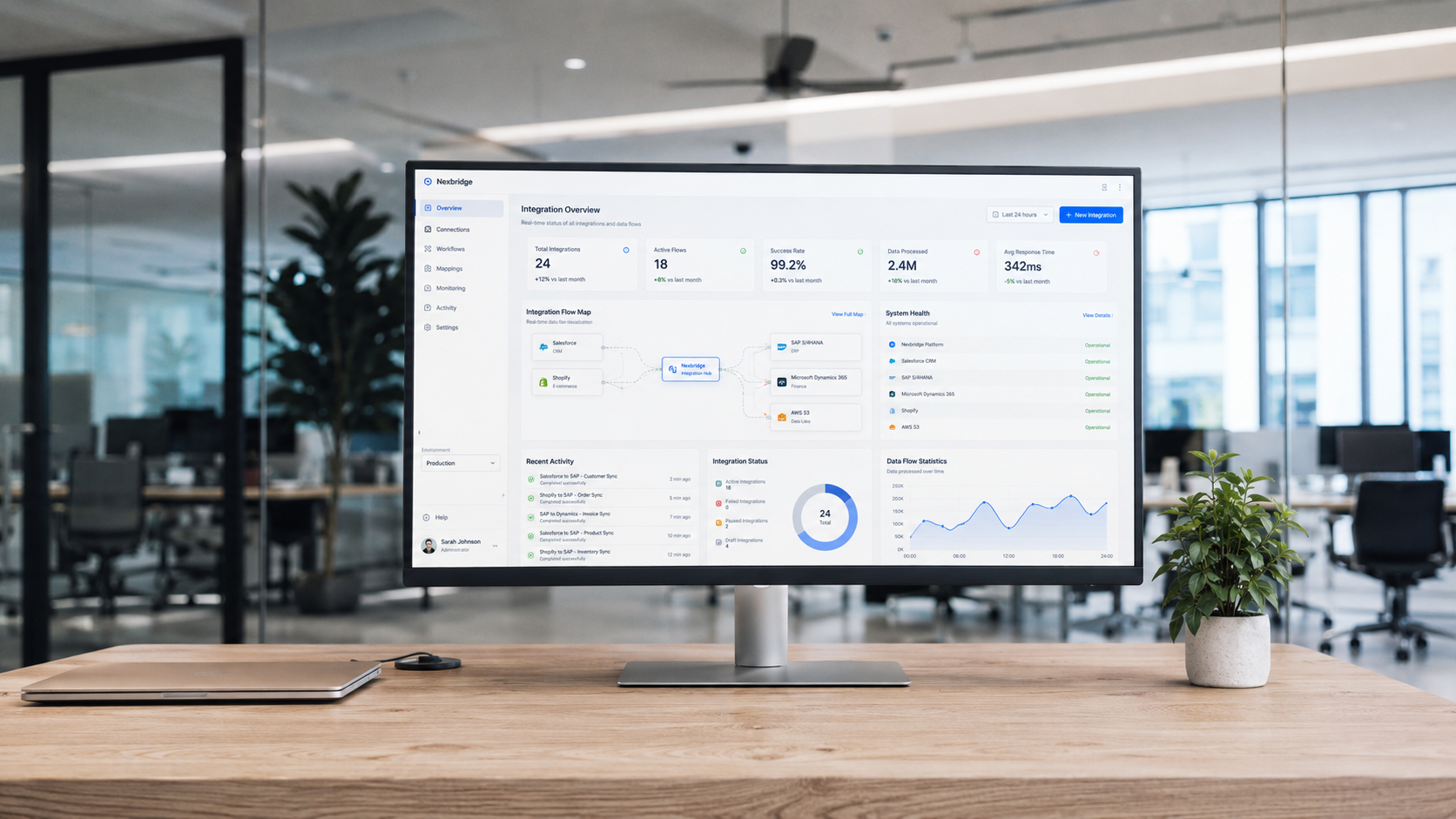

10+ Years
Experience in digital delivery

200+ Projects
Across web, apps & software

Global Client Coverage
Global delivery & collaboration

NDA Ready
Confidential, IP-aware workflows
ERP integration services connect an Enterprise Resource Planning system with other business applications such as CRM, ecommerce platforms, payment gateways, or logistics software so data flows automatically between them without manual re-entry. The result is a single connected technology environment where inventory, orders, finance, and customer data stay synchronised in real time across every platform your business uses.
If your organisation is dealing with any of these issues, you are in the right place. Each one is a symptom of the same root cause: systems that should be connected, aren't.
Your ERP holds one version of the truth. Your CRM holds another. Your ecommerce platform holds a third. None of them match. Customer-facing teams, operations, and finance are all working from different data sets and nobody fully trusts any of them.
Someone on your team downloads a report from one system and re-enters the same numbers into another every single day. It is error-prone, time-consuming, and entirely avoidable. ERP automation solutions eliminate this entirely the data moves itself.
You have decided to migrate to a new ERP platform. That decision does not exist in isolation your CRM, ecommerce store, payment gateway, and reporting tools all need to connect to the new environment. Without a structured ERP migration and integration services plan, migration creates months of disruption rather than improvement.
Your business uses 6, 8, 10 different software tools. Each one was adopted because it solved a specific problem. But none of them were chosen with integration in mind, and now every workflow involves jumping between tabs, copy-pasting data, and hoping nothing gets missed.
Leadership cannot make confident decisions because the reports they rely on are always 24–48 hours behind reality. By the time data has been exported, cleaned, and consolidated, it is already outdated. ERP data integration services that push live data to your dashboards solve this entirely.
As order volumes, supplier relationships, and customer interactions grow, the manual effort required to keep systems synchronised scales with them unless automation takes over. ERP workflow automation services replace the human layer with reliable, rule-based processes that run without supervision.
Our user access management services are built for organisations where data security, operational efficiency, and regulatory compliance are non-negotiable.
Early-stage businesses often start with point solutions Shopify for ecommerce, HubSpot for CRM, Xero for accounting. When order volume grows, those tools need to be connected to a central ERP. We build the integration layer that lets startups scale without adding administrative overhead proportionally.
SaaS businesses often have subscription billing platforms, CRM systems, and financial ERP systems that need to stay synchronised subscription status, usage-based billing events, renewal signals, and revenue recognition. CRM and ERP integration services that handle these flows reliably prevent billing errors and revenue leakage at scale.
Manufacturing and distribution businesses depend on tight synchronisation between procurement, production, inventory, and finance. When those systems are not integrated, purchase orders get duplicated, stock levels drift from reality, and financial reporting requires painful manual reconciliation at month end. ERP system integration eliminates all of that.
Large enterprises running multiple ERP instances across regional subsidiaries, acquired businesses, or separate legal entities need enterprise ERP integration services that consolidate reporting while preserving the autonomy of individual business units. We build integration architectures that deliver group-level visibility without forcing a single-ERP mandate.
From architecture design to post-deployment audits, our user & role management services cover every layer of access control your organisation requires.
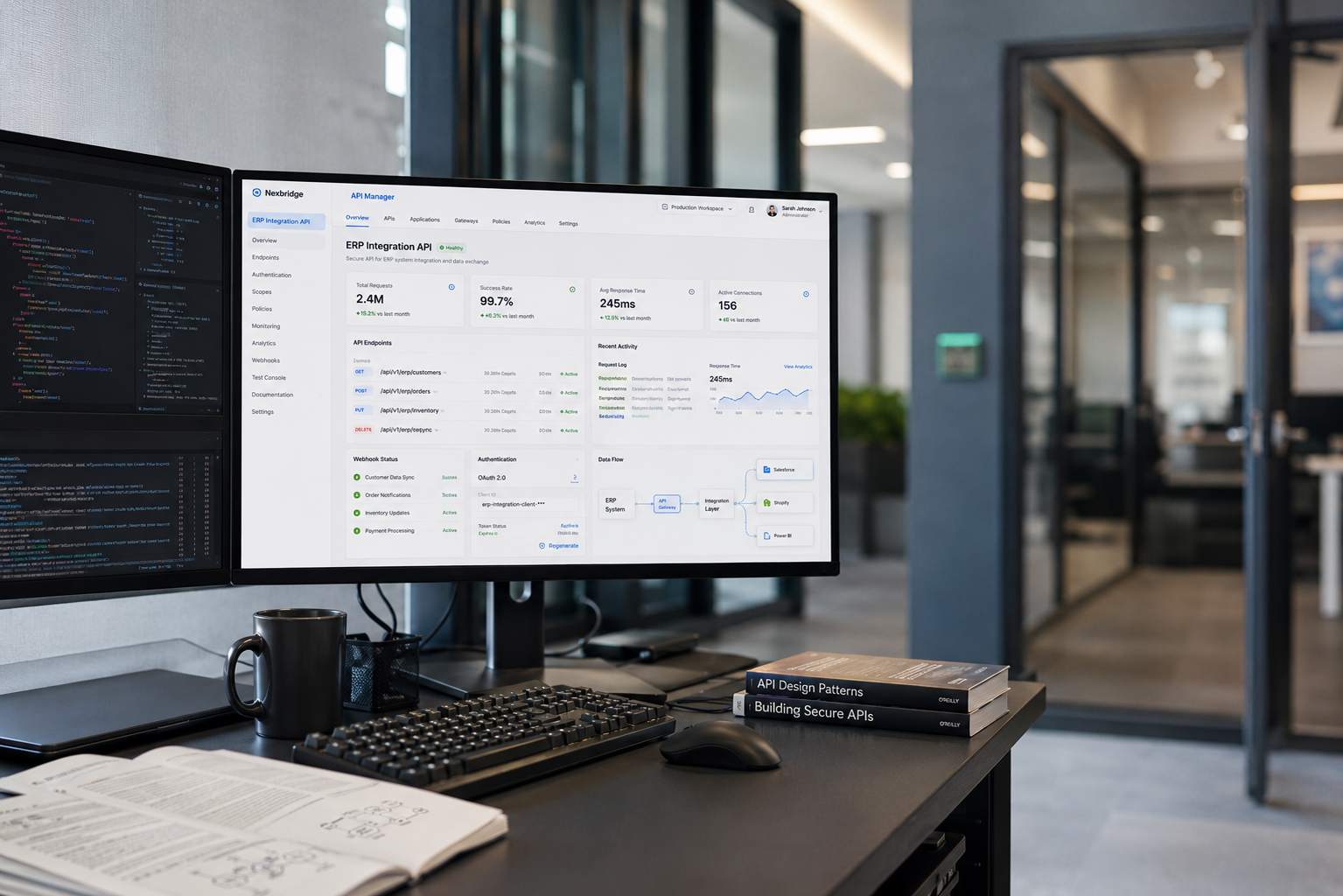
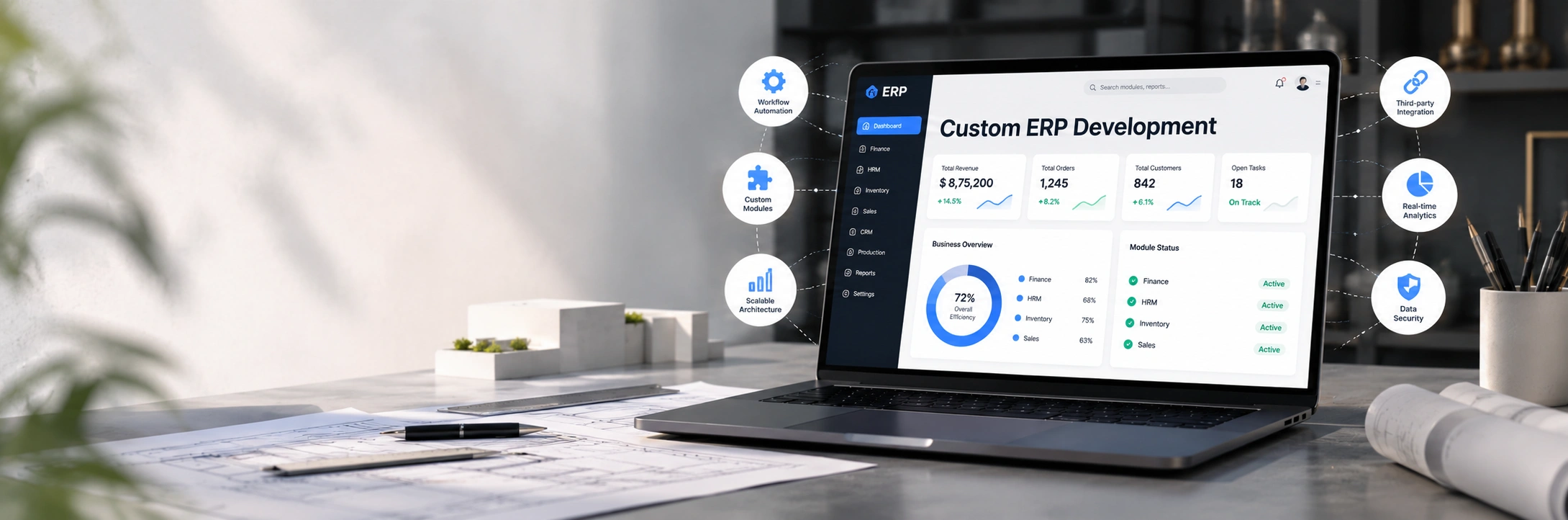
We build robust, well-documented API integration layers between your ERP and third-party platforms (CRM, ecommerce, payments). For multi-platform needs, we design middleware architectures that handle data transformation, validation, routing, and complete audit logging with built-in error handling.
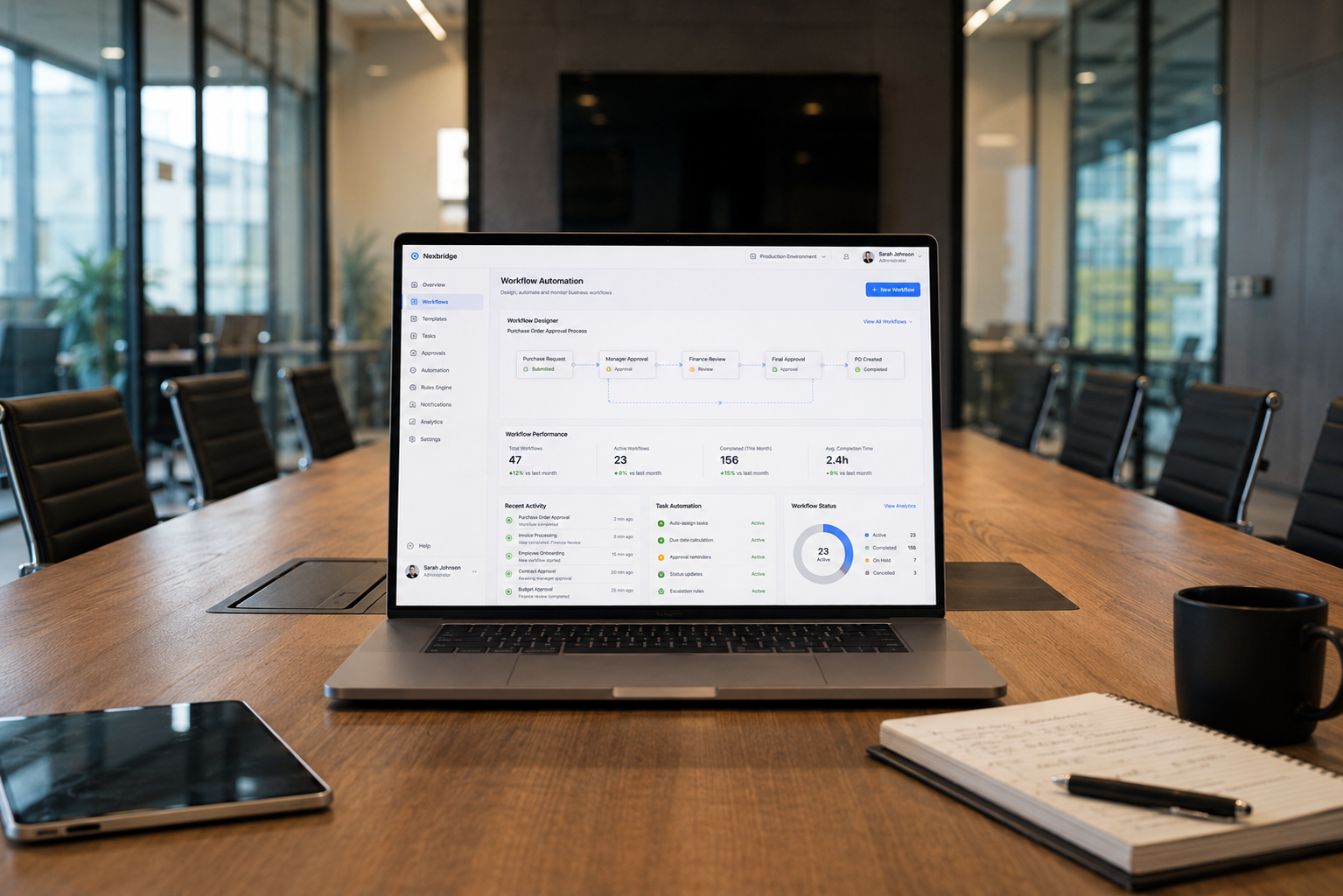
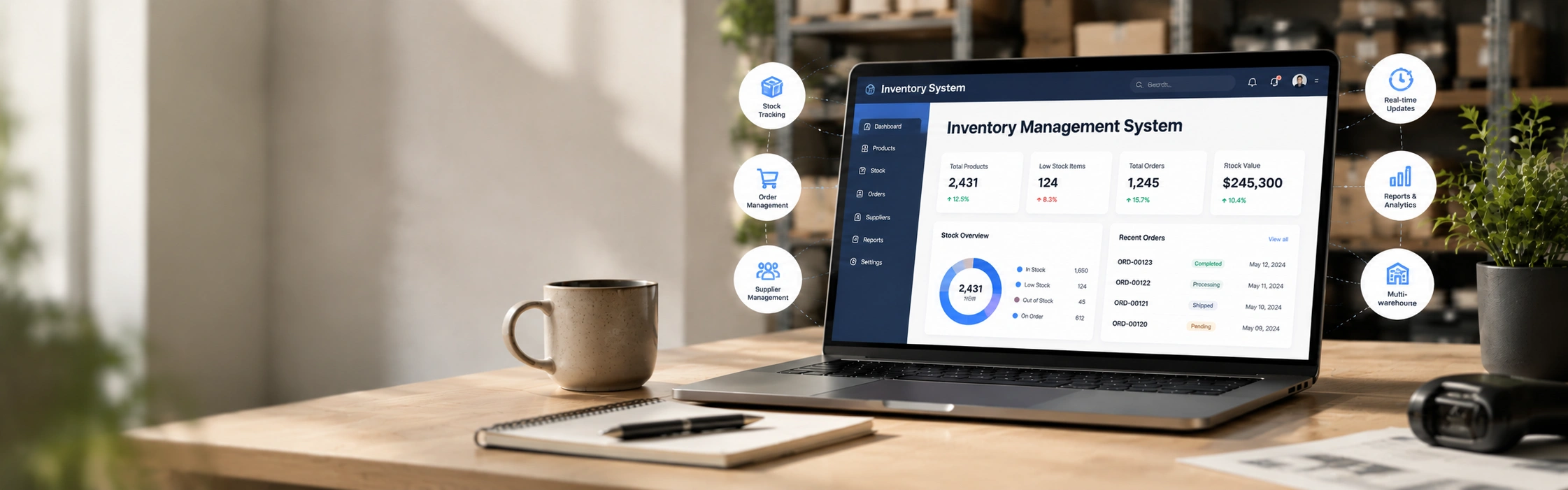
Integration moves data, but automation makes decisions. We replace manual, rule-based tasks with automated processes like PO approvals, low-stock triggers, automatic invoicing, and inter-department routing, permanently removing manual operational touchpoints.
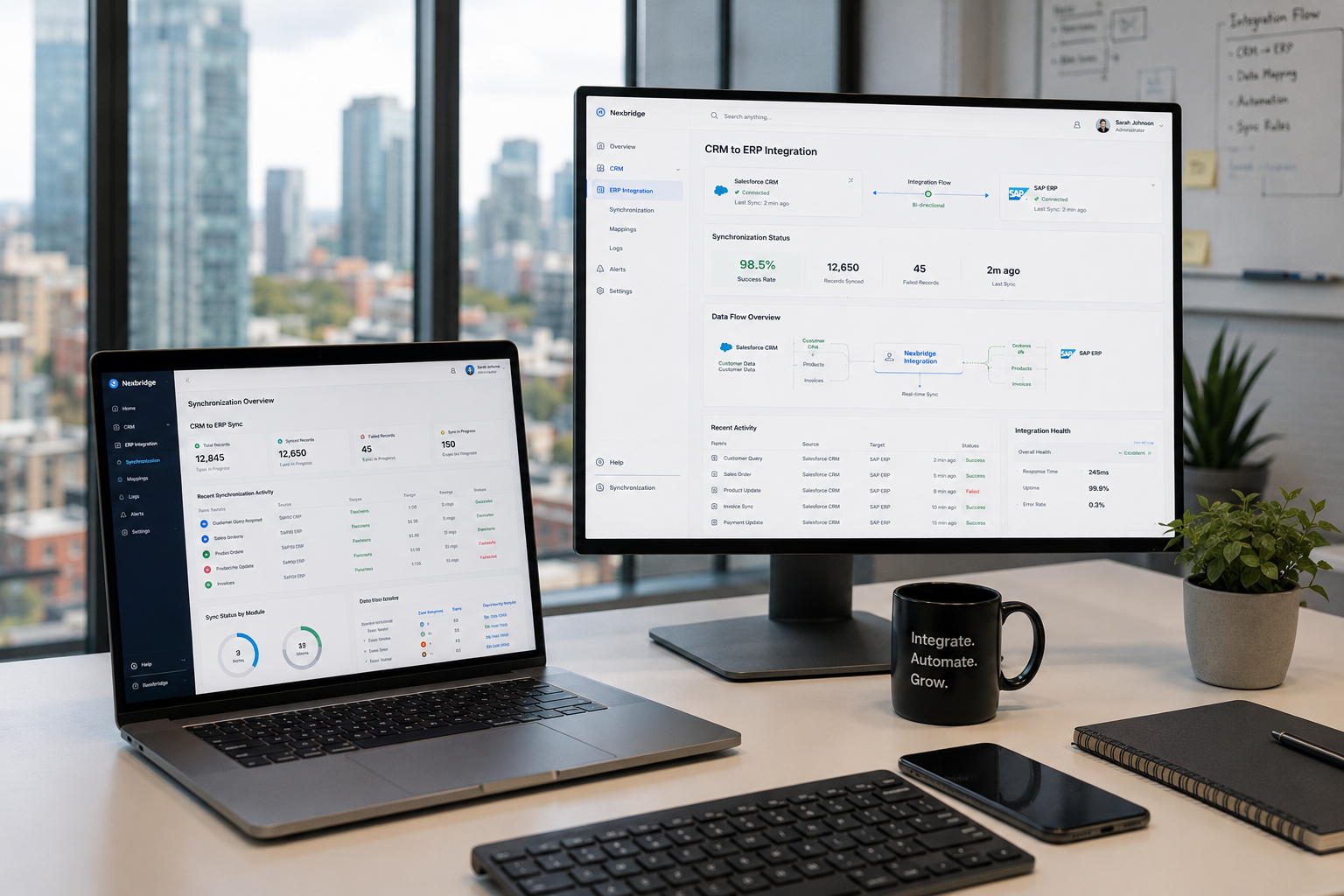
We bridge the gap between your sales data (CRM) and financial/order data (ERP). By bi-directionally syncing systems like Salesforce, HubSpot, or Zoho with SAP, Oracle, or Odoo, we ensure customer profiles, deal stages, and payment updates remain perfectly synchronized.
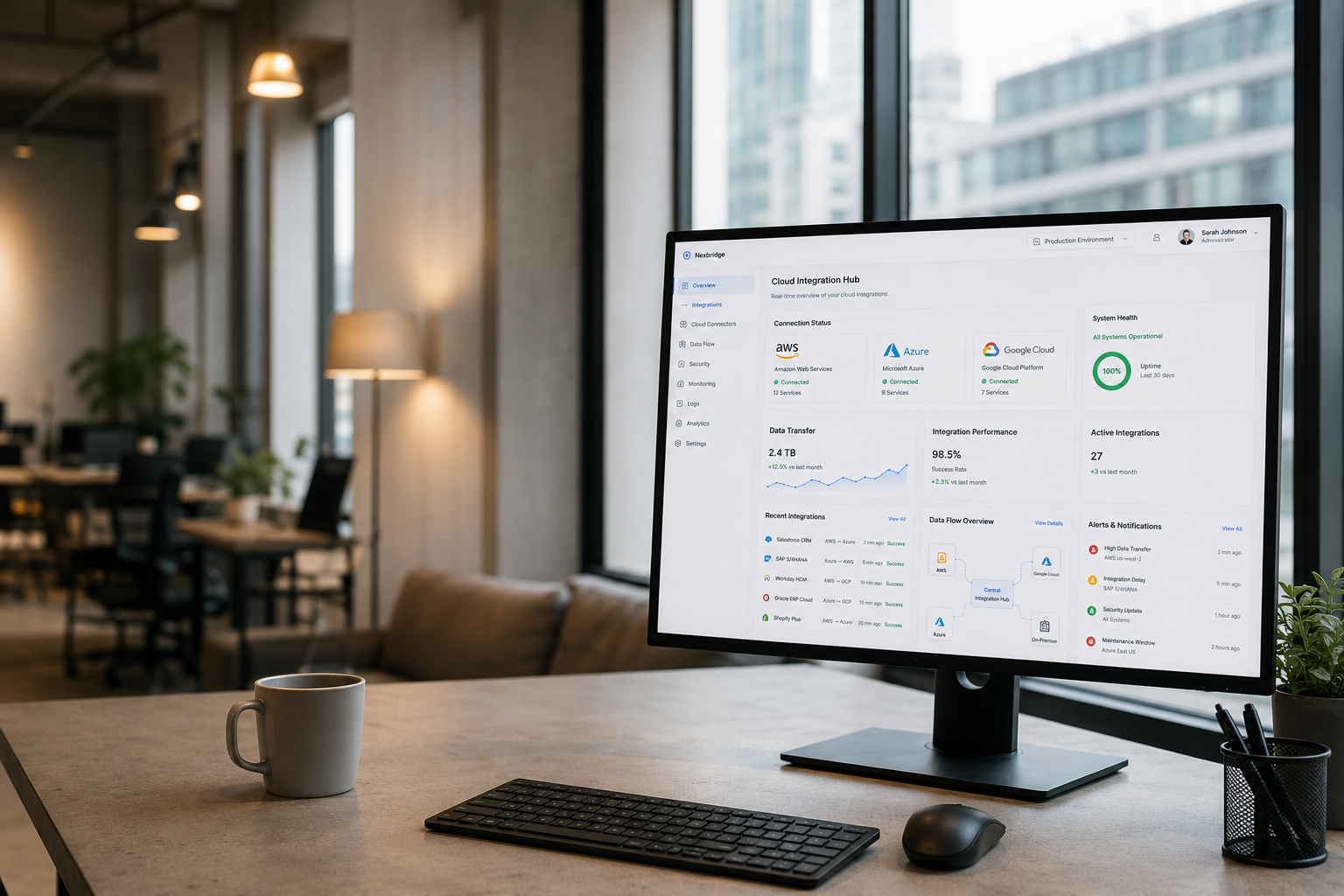
Migrating to or connecting a cloud ERP introduces authentication and data alignment challenges. We manage the full complexity of cloud-to-cloud and hybrid cloud-to-on-premise setups, securely handling OAuth authentication, rate limits, and data conflict resolution.

Unconnected storefronts (Shopify, WooCommerce, Magento) cause stock drift and delivery delays. We build real-time, bi-directional integrations that instantly synchronize product catalogs, stock counts, pricing, order entries, and returns without manual spreadsheet tracking.
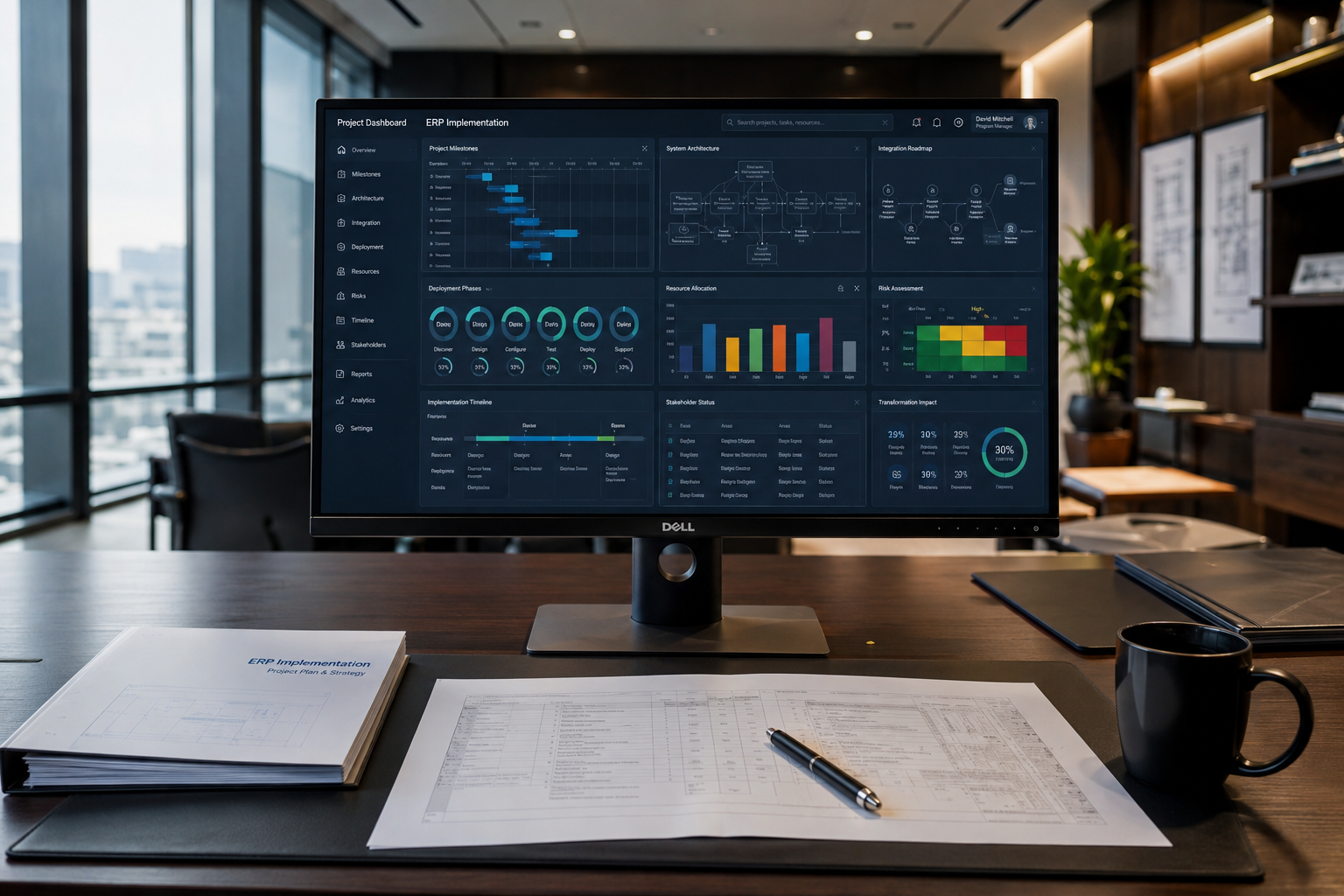
Before jumping into development, we provide strategic, vendor-neutral guidance. We assess your current software landscape, map out data structures, evaluate build-vs-buy connector options, and deliver clear integration blueprints to de-risk your program.
ERP integration touches live business systems. Our process is designed to minimise risk at every stage, keep your current operations running during development, and deliver integrations that work the first time not after three rounds of emergency patches.
We map your technology landscape, data flows, and manual processes while reviewing APIs and schemas under an NDA. Output: A detailed integration scope and comprehensive risk assessment before any development work begins.
Our architects design the middleware structure, data mapping logic, transformation rules, and error-handling strategies. Output: A complete integration blueprint signed off by both teams to eliminate all ambiguity before building.
We build in two-week sprints, delivering working integration endpoints against your actual systems for continuous testing. Core data flows are delivered first, followed by automation logic, error enhancements, and reporting hooks.
We run end-to-end functional testing, performance benchmarking, and structured UAT with your IT and operations teams. We specifically simulate failure scenarios—like network timeouts and invalid data—to ensure the system degrades gracefully.
We manage cutover planning, production deployment, and close hypercare monitoring during the initial live weeks. Post-launch retainers provide monitoring dashboards, failure alerts, optimization, and updates for platform compatibility as your business evolves.
We are platform-agnostic and technology-agnostic. Every integration stack is selected based on your existing environment and what delivers the most reliable, maintainable outcome for your business.









































ERP integration projects fail more often than they should not because of the technology, but because the agency did not understand the operational context. Here is why that does not happen with us.
We have been building ERP integrations, automation layers, and middleware systems since 2013. Our engineers understand how ERP data models work, where integration edge cases hide, and how to build connections that remain stable when the platforms on either end release updates. That operational depth is what separates a reliable integration from one that breaks every quarter.
We do not apply pre-built connector templates and call it an integration. We start by mapping your actual business processes how data flows through your organisation today, where it gets stuck, and where errors creep in. The integration logic we build reflects your operational reality, which means fewer edge cases in production and a system your team trusts from day one.
The ERP integrations we build do not need to be rebuilt when your business adds a new platform, a new subsidiary, or a new trading partner. We design integration middleware that is extensible by default so adding a new connection point means adding a new module, not rewriting the entire integration layer. Explore our broader web development services for full-stack delivery capability.

Slow integrations create operational bottlenecks that are often worse than no integration at all. We engineer every data exchange for throughput using asynchronous processing, intelligent queuing, and database indexing strategies that ensure integrations perform reliably under peak load, not just during UAT with a handful of test records.
Our ERP integration development company has delivered projects across multiple jurisdictions, each with distinct compliance requirements GDPR in the UK and EU, DSGVO in Germany, data residency considerations in Australia and the UAE. We factor regulatory requirements into integration architecture, not as an afterthought after deployment.
Integration projects have a reputation for running over time and over budget. We address this with two-week sprint delivery cycles, shared project management access, and direct communication with your project lead throughout. You see working integration builds at the end of every sprint not a black box that opens at go-live and surprises everyone.
Integration requirements vary by industry. We bring sector-specific understanding to every engagement not just technical capability applied generically.
We provide BOM synchronisation, production order automation, supplier EDI integration, and real-time shop-floor inventory feeds to the ERP ledger. Use case: A German auto-parts maker integrated their MES with SAP. Outcome: Month-end close process reduced from 5 days to 1.5 days.
We deliver multi-channel order management, real-time inventory sync across sales platforms, and automated ERP-connected return processing. Use case: A US ecommerce brand integrated Shopify Plus with NetSuite. Outcome: Inventory discrepancy rate dropped from 4.2% to 0.1% within 30 days.
We ensure HIPAA-compliant integration between EHRs, procurement ERPs, and finance tools with full lot traceability and audit trails. Use case: A UK pharma distributor integrated SAP ERP with a pharmacovigilance platform. Outcome: Compliance reporting time cut by 60%.
We handle subscription billing integration for revenue recognition, CRM-to-ERP deal automation, and usage-based billing event processing. Use case: A UAE SaaS company integrated Chargebee with their ERP and HubSpot. Outcome: Revenue recognition delays were completely eliminated.
We connect TMS, WMS, and ERP for supply chain visibility with carrier APIs and automated freight cost postings. Use case: An Australian 3PL business integrated their WMS and TMS with Dynamics 365. Outcome: Automated billing accuracy reached 99.8% in one cycle.
We integrate ERPs with banking platforms and gateways for automated reconciliation, audit-ready logs, and real-time treasury feeds. Compliance: The entire integration architecture is custom-built to comply strictly with FCA, SEC, and local regulatory frameworks.
Our delivery model is built for remote-first international engagement. We work across time zones with structured communication, full NDA protection, and consistent delivery quality regardless of geography.
US businesses value speed, direct communication, and measurable ROI. Our ERP integration services USA engagements are structured to move quickly from discovery to production deployment with straightforward accountability and no bureaucratic delays. We work with manufacturing, distribution, SaaS, and ecommerce businesses across New York, Chicago, Austin, and beyond.
UK businesses expect GDPR-compliant integration architecture, precise documentation, and clear contractual accountability. We have delivered ERP integration programmes for UK-based distributors, manufacturers, and professional services firms across London, Manchester, Birmingham, and Edinburgh with GMT-aware communication and direct access to senior engineers throughout.
German businesses hold integration quality to high technical and compliance standards. DSGVO data handling, audit-ready transaction logs, and precisely documented API contracts are baseline expectations not additions. We have delivered ERP integration and automation services for Mittelstand manufacturers and technology firms in Frankfurt, Munich, Berlin, and Hamburg.
Australian businesses benefit from our cloud-first integration architecture eliminating on-premise integration infrastructure while delivering the performance and reliability that high-volume operations require. We serve clients across Sydney, Melbourne, and Brisbane with partial AEST overlap and async-first delivery workflows that keep projects moving around the clock.
The UAE's diverse business landscape creates demand for ERP integration solutions that handle multi-currency environments, Arabic-language data, and cross-border compliance. We have delivered integration programmes for Dubai-based distributors, SaaS companies, and enterprise businesses managing supply chains across the GCC with the full complexity that entails.
Let us connect your systems, eliminate manual data handling, and build the integration layer your business has needed for years. Receive a detailed proposal within 48 hours of your first call.
.webp)

.webp)